
Taqa Castle (also spelled Taqah Castle and known in Arabic as حصن طاقة) is one of the most important historical landmarks in the Dhofar Governorate and one of the finest examples of traditional Omani architecture. Located in the coastal town of Taqa, around 35 kilometres east of Salalah, the beautifully restored castle offers visitors an authentic glimpse into Oman’s history, governance, and traditional way of life.
Originally built as a private residence during the 19th century, the castle later became the administrative headquarters and official residence of the Wali (Governor) of Taqa. Today, it has been transformed into a museum where visitors can explore furnished rooms, historic watchtowers, ancient weapons, household items, and traditional architecture.
A visit to Taqa Castle is often combined with nearby attractions such as Taqa Beach, Khor Rori (Sumhuram), Wadi Darbat, and Jabal Samhan, making it one of the highlights of every East Salalah tour.
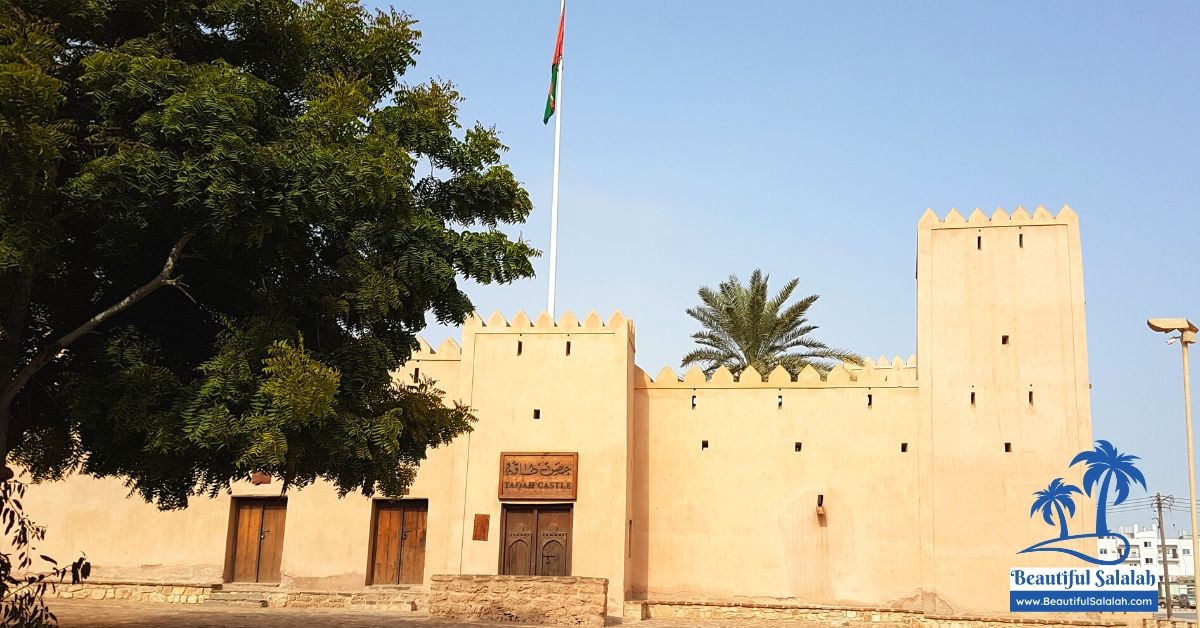
Standing in the heart of the historic fishing town of Taqa, Taqa Castle beautifully preserves the lifestyle of Dhofar’s rulers during the late 19th and early 20th centuries.
Unlike many forts that display only empty rooms, Taqa Castle has been carefully furnished with original furniture, weapons, household equipment, and personal belongings, allowing visitors to imagine daily life inside the residence.
Its traditional mud-brick construction, wooden ceilings, defensive towers, and spacious courtyard reflect the architectural style that has defined southern Oman for generations.
Popular tour to explore Taqah Castle: Mirbat & Taqah Tour
Contents
History of Taqa Castle
The castle was constructed during the 19th century as the private residence of Sheikh Ali bin Taman Al Ma’shani, an influential tribal leader of the region.
During the reign of Sultan Taimur bin Faisal (1913–1932), ownership of the castle was transferred to the government, and it became both the official residence and administrative headquarters of the local Wali (Governor).
Over the following decades, ten successive governors lived and worked within the castle until 1984, making it one of the most important administrative buildings in Dhofar.
In 1991, the Ministry of Heritage and Culture undertook a comprehensive restoration project, carefully preserving the castle according to its original architectural design before opening it as a museum for visitors.
Traditional Omani Architecture
Taqa Castle showcases the simplicity and practicality of traditional Omani defensive architecture.
Built using coral stone, limestone, mud bricks, and timber, the structure was designed to provide both comfort and security.
The castle includes:
- Defensive towers
- Thick walls
- Central courtyard
- Traditional wooden doors
- Decorative windows
- Internal staircases
- Living quarters
- Storage rooms
Every corner reflects the craftsmanship and lifestyle of historic Oman.
Ground Floor
The ground floor introduces visitors to the administrative and service areas of the castle.
Highlights include:
Barza (Reception Hall)
The Barza served as the official reception area where the Wali welcomed local residents, tribal leaders, merchants, and distinguished guests.
It functioned as the political heart of the castle and remains one of its most interesting rooms.
Guard Room
Security was essential, and guards remained on duty around the clock to protect the governor and the castle.
Weapons and military equipment were stored nearby, allowing quick access whenever needed.
Prison
The small prison within the castle reminds visitors of its administrative role.
Although simple in appearance, it reflects the justice system of its time and still contains original restraints once used for prisoners.
Courtyard and Well
The open central courtyard forms the heart of the castle.
Here visitors will find a traditional well (Tawi) that supplied drinking water to the residents.
Since the well was located inside the castle walls, it provided a secure water source even during times of conflict.
Nearby stands the traditional Tannur oven, where fresh bread, meat, and fish were prepared daily.
Storage Rooms
Several rooms were dedicated to storing:
- Dates
- Grain
- Dried fish
- Firewood
- Household supplies
- Weapons
- Equipment
These storage facilities ensured that the castle could remain self-sufficient for extended periods.
First Floor
The upper level served as the private residential area for the Wali and his family.
Visitors can explore beautifully restored rooms including:
- Family living areas
- Private majlis
- Bedrooms
- Children’s rooms
- Kitchen
- Ablution room
- Resting rooms
The interiors have been carefully furnished with traditional carpets, furniture, kitchen utensils, clothing, and decorative items that recreate daily life during the early twentieth century.
Watch Towers
Three impressive watchtowers stand at the corners of the castle.
These towers provided panoramic views across the surrounding coastline, agricultural lands, and nearby settlements.
From these elevated positions, guards monitored approaching visitors, merchants, and potential threats while protecting both the governor and the town.
Today they provide excellent views over historic Taqa.
Museum Exhibits
One of the highlights of Taqa Castle is its authentic collection of historical objects.
Visitors can view:
- Traditional Omani furniture
- Swords and rifles
- Household utensils
- Jewellery
- Clothing
- Farming tools
- Kitchen equipment
- Historical photographs
- Manuscripts
Unlike many museums, the exhibits remain arranged inside their original rooms, creating the feeling that the residents have only recently stepped outside.
Visiting Taqa Castle
The castle is easy to explore at a relaxed pace.
Informational displays explain the history and purpose of each room, making it suitable for visitors of all ages.
Photography is permitted in most areas, allowing visitors to capture the beautiful architecture and authentic interiors.
Opening Hours
The castle is generally open:
Saturday – Thursday
- 9:00 AM – 4:00 PM
Friday
- 8:00 AM – 11:00 AM
Opening hours may vary during public holidays and Ramadan.
Entrance Fee
A small entrance fee applies.
Traditionally the ticket prices have been:
- Adults: 500 Baiza
- Children (with families): 100 Baiza
Ticket prices may change, so visitors are encouraged to verify the latest rates before visiting.
Nearby Attractions
Taqa Beach
A beautiful white sandy beach perfect for relaxing, photography, and family picnics.
Khor Rori (Sumhuram)
A UNESCO World Heritage Site preserving one of the ancient frankincense trading ports.
Wadi Darbat
The most famous valley in Salalah with waterfalls, boating, and lush landscapes.
Jabal Samhan
Home to Oman’s largest nature reserve and spectacular mountain viewpoints.
Mirbat
A historic coastal town known for its harbour, traditional houses, beaches, and rich maritime history.
Why Visit Taqa Castle
Taqa Castle offers one of the best-preserved examples of traditional governance and daily life in southern Oman.
Unlike many historical forts, its carefully furnished interiors allow visitors to experience the atmosphere of a working governor’s residence.
Combined with nearby beaches, UNESCO archaeological sites, mountain scenery, and valleys, Taqa Castle forms an essential part of any visit to eastern Dhofar.
Whether you’re passionate about history, architecture, photography, or Omani culture, the castle offers a fascinating journey into the region’s past.
Travel Tips
Best Time to Visit
October to April offers pleasant temperatures, while the Khareef season (late June to September) transforms the surrounding countryside into lush green landscapes.
What to Wear
Light, modest clothing and comfortable walking shoes are recommended.
Photography Tips
The best lighting is during the early morning or late afternoon. The watchtowers and courtyard provide excellent photo opportunities.
Family Suitability
Excellent for families, school groups, history enthusiasts, and cultural travellers.
Adventure Level
Easy. The castle features staircases but is otherwise simple to explore.
Frequently Asked Questions
Where is Taqa Castle?
Taqa Castle is located in the Wilayat of Taqa, approximately 35 kilometres east of Salalah.
Why is Taqa Castle famous?
It served as the residence of the local governor and is now one of the best-preserved historical castles in Dhofar.
How old is Taqa Castle?
The castle was built during the 19th century before becoming the governor’s residence during the reign of Sultan Taimur bin Faisal.
How much time should I spend there?
Most visitors spend between 45 minutes and one hour exploring the castle.
Can I take photographs inside?
Yes, photography is generally permitted throughout most areas of the castle.
Is Taqa Castle worth visiting?
Absolutely. It is one of the most important historical attractions near Salalah and provides a fascinating insight into Oman’s heritage.
Explore Taqa Castle with Beautiful Salalah Tours
Visit Taqa Castle with Beautiful Salalah Tours and experience one of Dhofar’s most fascinating historical landmarks with the guidance of knowledgeable local experts.
Our East Salalah tours also include:
- Wadi Darbat
- Khor Rori (Sumhuram UNESCO Site)
- Jabal Samhan
- Taqa Beach
- Mirbat
- Baobab Trees
- Anti-Gravity Point
Recommended Tours
- Wadi Darbat & Jabal Samhan Tour (Private)
- Wadi Darbat & Jabal Samhan Tour (Group)
- East Salalah Mountain Safari (Wadi Darbat) – Half Day
- Mirbat & Taqah Heritage Tour
- Oman Coastal Highway (Fushi Dunes & Hasik Beach)
We also offer customized tours that include Wadi Darbat, Jabal Samhan, Mughsail Beach, Marneef Cave, Eftalqout Beach, Shaat Viewpoint, and many other spectacular attractions across Dhofar.
For any inquiries, please contact us at info@beautifulsalalah.com or WhatsApp us at +968 9135 3647.

Comment (0)