
The Wadi Darbat Travertine Waterfall, also known as the Travertine Curtain, is one of the most spectacular natural attractions in Salalah and one of the hidden highlights of the Dhofar Mountains. Located in the lower section of Wadi Darbat, this seasonal waterfall plunges dramatically over a towering limestone cliff before flowing toward Khor Rori, creating one of the most breathtaking landscapes in Oman.
Unlike the famous Cascade Waterfall, the Travertine Waterfall is less crowded and offers a more adventurous experience. During the Khareef season, water flows over an impressive travertine cliff, creating a curtain-like waterfall with crystal-clear turquoise pools below. The combination of towering cliffs, lush greenery, and vibrant blue water makes it one of the most photogenic places in Salalah.
Whether you’re a photographer, hiker, or nature enthusiast, Wadi Darbat Travertine Waterfall is a destination that deserves a place on your East Salalah itinerary.
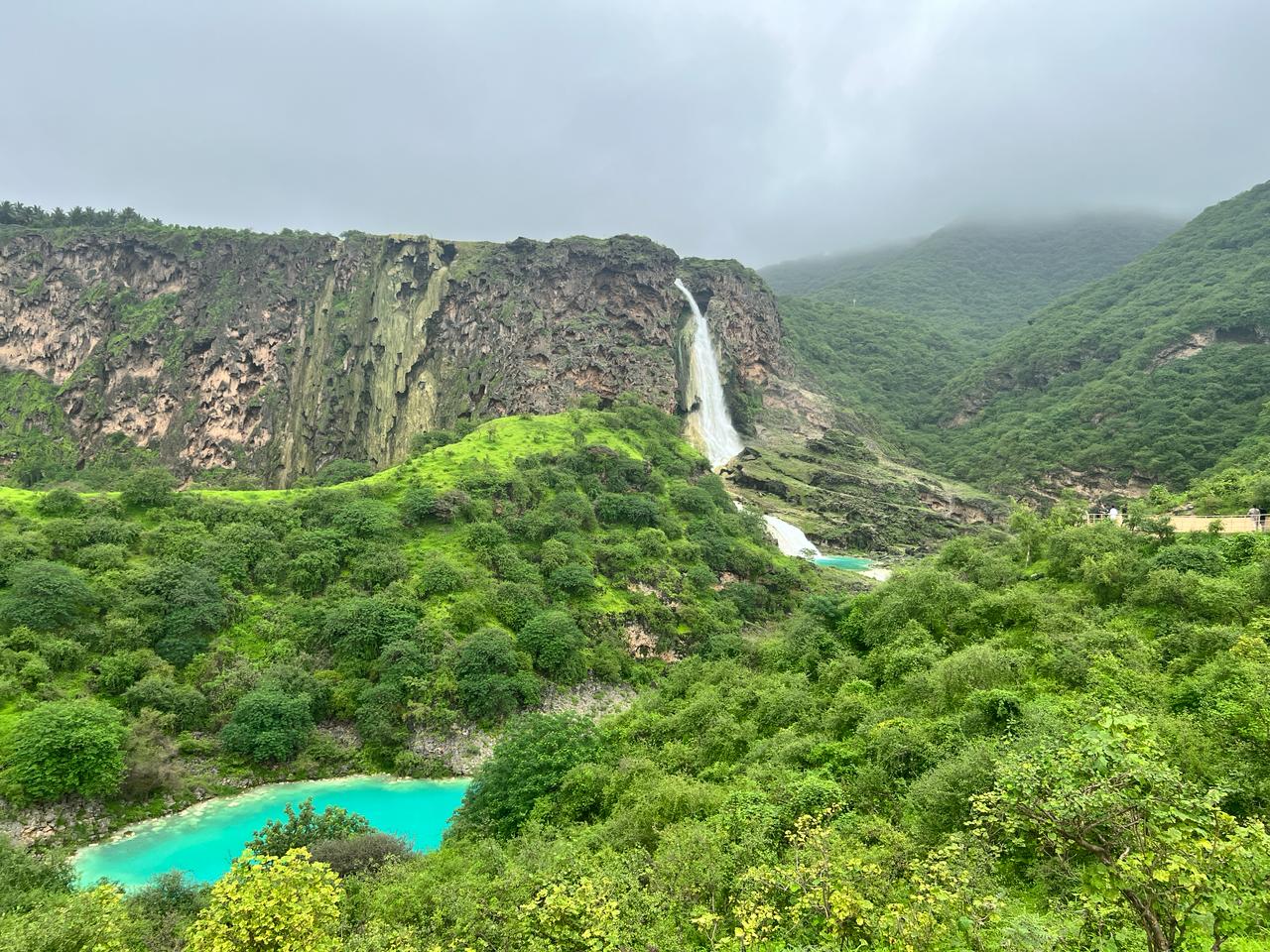
The Travertine Waterfall is one of the most remarkable geological attractions in Dhofar.
Water flows over a massive travertine cliff, creating a beautiful natural curtain that changes dramatically depending on the amount of rainfall during the Khareef season. As the water descends into a series of natural pools, it eventually continues its journey toward the famous Khor Rori lagoon and the Arabian Sea.
The towering cliff, lush valley, and turquoise pools create scenery unlike anywhere else in Oman.
Contents
What is a Travertine Curtain?
The name “Travertine Curtain” comes from the unique geological formation found on the cliff face.
Travertine is a form of limestone created by mineral-rich water flowing over rock for thousands of years. Over time, minerals are deposited layer upon layer, forming textured rock surfaces that resemble curtains hanging from the cliff.
In Wadi Darbat, these formations create an extraordinary backdrop for the seasonal waterfall, making it one of the most distinctive geological features in the Dhofar region.
Seasonal Waterfall
The Travertine Waterfall is completely dependent on rainfall.
During years of good Khareef rainfall, water flows across much of the cliff face, creating a spectacular curtain of cascading water. In drier years, the waterfall becomes narrower, with water flowing through only a few channels.
This changing appearance makes every visit unique, as the waterfall is never exactly the same from one season to the next.
Turquoise Pools
One of the most striking features of the Travertine Waterfall is the vibrant turquoise colour of the water.
The mineral-rich water, limestone formations, and sunlight combine to create stunning blue-green pools that appear almost unreal during clear weather.
These pools are among the most photographed natural features in Salalah and are particularly beautiful during the peak of the Khareef season.
Hiking to the Waterfall
Reaching the Travertine Waterfall is an enjoyable adventure.
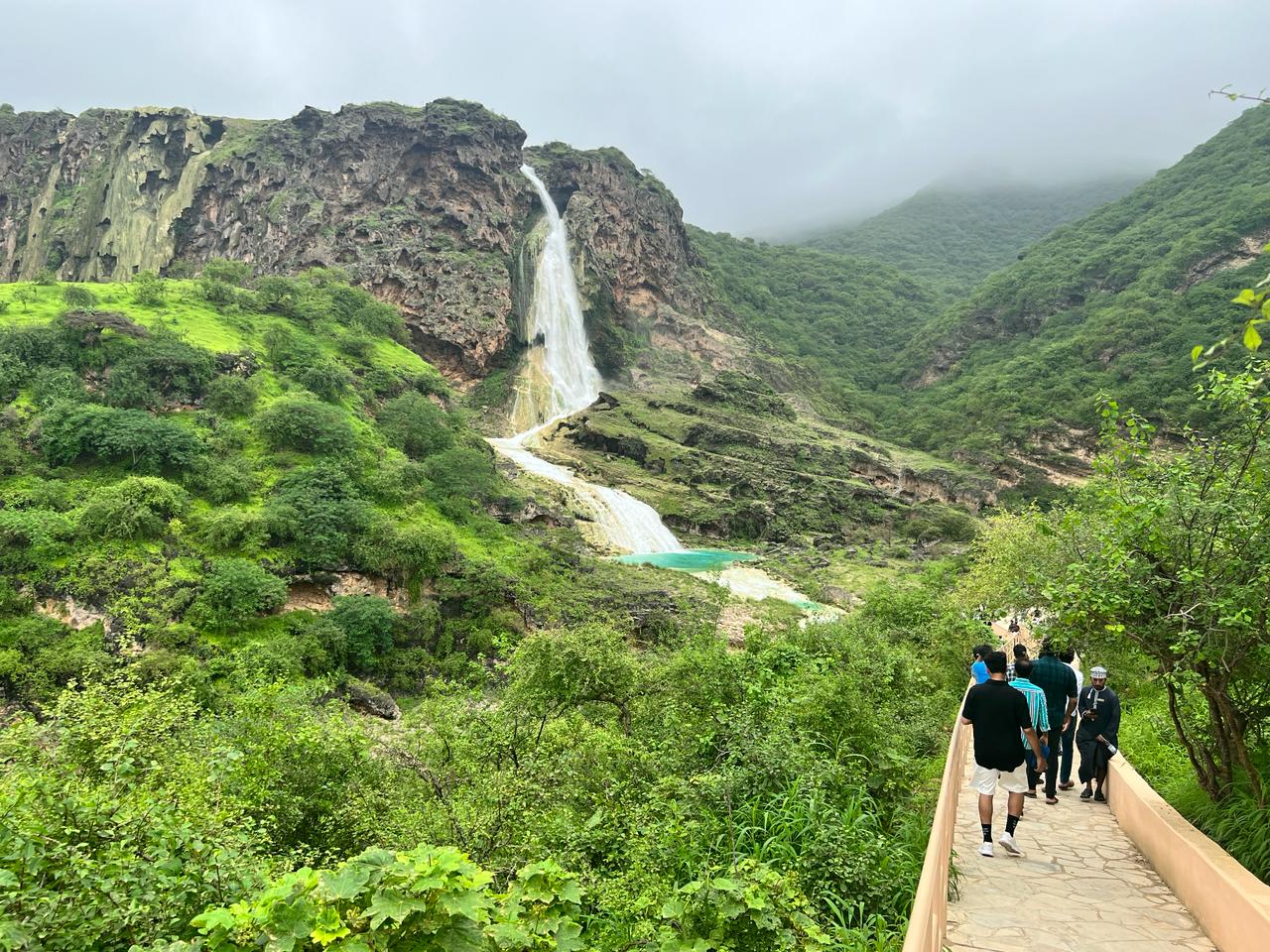
Visitors can access the waterfall by following a walking trail from the nearby parking area. The route passes rocky terrain, streams, and scenic viewpoints before reaching the base of the waterfall.
The walk usually takes around 20 to 30 minutes, depending on the chosen route and seasonal conditions. Comfortable trekking shoes are strongly recommended, especially during Khareef when rocks can become slippery.
Panoramic Viewpoint
For those who prefer panoramic scenery, viewpoints above the waterfall provide breathtaking views across Wadi Darbat, the Travertine Curtain, Khor Rori Lagoon, and the Arabian Sea in the distance.
These elevated viewpoints are among the best photography locations in East Salalah.
During the Khareef season, drifting clouds often surround the cliffs, creating dramatic landscapes throughout the day.
Khareef Season
The Travertine Waterfall reaches its peak during the Khareef season, generally from late June until early September.
Southwest monsoon rains transform the surrounding mountains into lush green landscapes while increasing the volume of water flowing over the cliff.
The cool weather, mist-covered mountains, and spectacular waterfall attract thousands of visitors every year.
Photography
The Travertine Waterfall is considered one of the finest photography locations in Oman.
Popular photography subjects include:
- Travertine Curtain
- Turquoise pools
- Limestone cliffs
- Seasonal waterfall
- Mist-covered mountains
- Wadi Darbat Valley
- Khor Rori in the distance
Morning light usually provides the clearest views, while cloudy Khareef afternoons create dramatic atmospheric photographs.
Nearby Attractions
Wadi Darbat Lake
Enjoy boating, kayaking, paddle boats, and relaxing picnic areas.
Wadi Darbat Cascade Waterfall
One of the largest seasonal waterfalls in Dhofar.
Jabal Samhan
Oman’s largest nature reserve offering spectacular mountain viewpoints.
Tawi Atair Sinkhole
One of the world’s largest natural sinkholes located near Wadi Darbat.
Khor Rori (Sumhuram)
A UNESCO World Heritage Site and one of the ancient frankincense trading ports.
Why Visit Wadi Darbat Travertine Waterfall
The Travertine Waterfall combines spectacular geology, dramatic waterfalls, and breathtaking mountain scenery into one unforgettable destination.
Its towering limestone cliff, turquoise pools, and peaceful hiking trails offer an experience that is very different from the more popular areas of Wadi Darbat.
For photographers, hikers, and anyone seeking Salalah’s most impressive natural landscapes, the Travertine Curtain is an essential stop.
Travel Tips
Best Time to Visit
The waterfall is at its most spectacular between July and early September during the Khareef season.
What to Wear
Wear sturdy walking shoes with good grip. Lightweight waterproof clothing is recommended during Khareef.
Photography Tips
Early morning provides softer light, while misty afternoons create dramatic landscapes. Bring a wide-angle lens for capturing the full waterfall.
Family Suitability
Suitable for families with older children who are comfortable walking on natural trails.
Adventure Level
Moderate. Short hiking sections include uneven rocky terrain.
Frequently Asked Questions
Where is the Wadi Darbat Travertine Waterfall?
It is located in the lower section of Wadi Darbat, approximately 40 kilometres east of Salalah.
Why is it called the Travertine Curtain?
The waterfall flows over a large travertine limestone formation that resembles a natural curtain.
Is the waterfall seasonal?
Yes. The waterfall depends on Khareef rainfall and is usually most impressive between July and September.
How long is the hike?
The walk from the parking area generally takes around 20–30 minutes depending on the chosen route.
Can I swim in the pools?
Swimming is not recommended due to slippery rocks, changing water conditions, and safety concerns.
Is the Travertine Waterfall worth visiting?
Absolutely. It is considered one of the most spectacular waterfalls and geological formations in Salalah.
Explore Wadi Darbat Travertine Waterfall with Beautiful Salalah Tours
Discover one of Salalah’s most spectacular hidden waterfalls with Beautiful Salalah Tours.
Our experienced Omani guides will take you to the best viewpoints while sharing fascinating insights into the geology, wildlife, and natural history of Wadi Darbat.
Popular Tours Including Wadi Darbat
- Wadi Darbat & Jabal Samhan Tour (Private)
- Wadi Darbat & Jabal Samhan Tour (Group)
- East Salalah Mountain Safari (Wadi Darbat) – Half Day
We also offer customized tours that include Wadi Darbat, Jabal Samhan, Mughsail Beach, Marneef Cave, Eftalqout Beach, Shaat Viewpoint, and many other spectacular attractions across Dhofar.
For any inquiries, please contact us at info@beautifulsalalah.com or WhatsApp us at +968 9135 3647.

Comment (0)